Revolutionizing Healthcare Education with Virtual Reality Applications

DESIGN
Revolutionizing Healthcare Education with Virtual Reality Applications
It takes approx. 3 minutes to read this article

Sponsored article

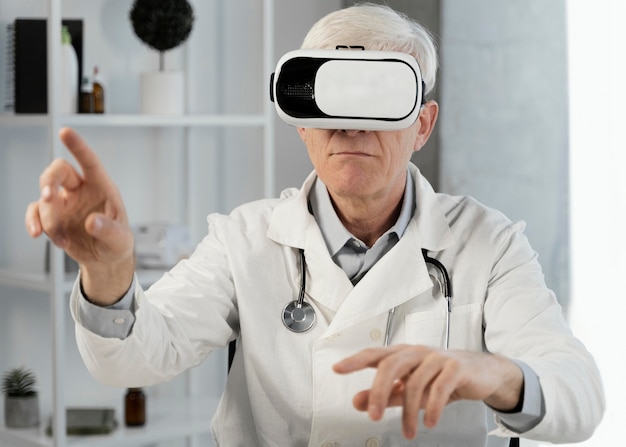
In recent years, the integration of virtual reality (VR) into healthcare education has opened new horizons for both educators and students. This cutting-edge technology is reshaping medical training methods by immersing learners in realistic environments where they can practice complex procedures without risk. VR not only enhances traditional learning techniques but also addresses the growing demand for skilled healthcare professionals by providing engaging, hands-on experiences that hone critical skills.

How virtual reality enhances medical training

Virtual reality is transforming medical training by providing interactive simulations that significantly enhance skill development. Through immersive experiences, virtual reality enables medical students and professionals to engage with realistic scenarios that closely mimic real-life situations. This advanced technology offers several advantages in healthcare education:

  • Enhanced learning experiences: Virtual reality allows learners to practice procedures and techniques in a controlled environment, leading to a deeper understanding of complex concepts.
  • Safety and risk management: Trainees can perform high-risk procedures in a virtual setup, reducing the potential for real-world errors.
  • Immediate feedback: Virtual reality platforms offer instant feedback and performance analytics, facilitating quicker skill acquisition and improvement.
  • Accessibility and flexibility: Virtual simulations are accessible from various locations, providing flexibility to learners and reducing logistical limitations.

To explore more about how virtual reality is revolutionizing healthcare education, visit https://spirit-sbe.eu.

Benefits of virtual reality in healthcare education

The benefits of virtual reality in healthcare education are transformative, offering a dynamic shift in how students engage with medical curricula. Virtual reality provides an immersive learning environment that significantly enhances student engagement, fostering a deeper connection with educational material. This increased interaction allows students to experience real-world scenarios without leaving the classroom, bridging the gap between theoretical knowledge and practical application. Consequently, learning outcomes are markedly improved as students can practice procedures, develop critical decision-making skills, and gain confidence in a risk-free setting. Moreover, virtual reality facilitates personalized learning, enabling students to progress at their own pace, thus accommodating diverse learning styles. Its interactive nature ensures that learners are not mere passive consumers of information but active participants, leading to better retention of knowledge. These benefits underscore the potential of virtual reality to revolutionize healthcare education by providing an innovative platform that prepares future professionals with unparalleled efficiency and effectiveness.

Future trends in virtual reality for healthcare learning

As we look ahead, future trends in virtual reality for healthcare learning are poised to transform education through groundbreaking innovations. Key areas of development include:

  • The integration of artificial intelligence with virtual reality technology advances, enabling personalized learning experiences that adapt to each student’s pace and style.
  • Enhanced realism in virtual environments through the use of haptic feedback, allowing students to perform complex medical procedures with a true-to-life tactile experience.
  • Wider adoption of cloud-based VR platforms, facilitating accessible and collaborative educational innovation across the globe.
  • Increased focus on multi-user VR experiences, fostering teamwork and communication skills in simulated healthcare scenarios.
  • Expansion of VR content libraries tailored to niche medical specializations, offering immersive modules that cater to specific fields like neurology or cardiology.

These advancements signify a paradigm shift in how medical professionals are trained, bridging theory and practice more effectively than ever before.

Add comment

Your email address will not be published. Required fields are marked *

*

4 × 1 =

Recommended articles
Maximizing Your Federal Job Application: The Power of Resume Writing Assistance
Discover how expert resume writing services can elevate your federal job application, emphasizing qualifications and enhancing your chances of landing your desired government position.
The importance of travel support in ensuring executive safety
Learn how travel support plays a pivotal role in maintaining the safety of business executives. Discover how comprehensive risk strategies are imperative for safeguarding senior management against potential threats during travel.
Crafting Compelling Conversations: Techniques for Engaging Interview Dialogue
Discover techniques to create engaging and memorable interview dialogues that captivate audiences and foster meaningful exchanges.
Latest articles